Pineberry Script Typeface for Handmade Brands
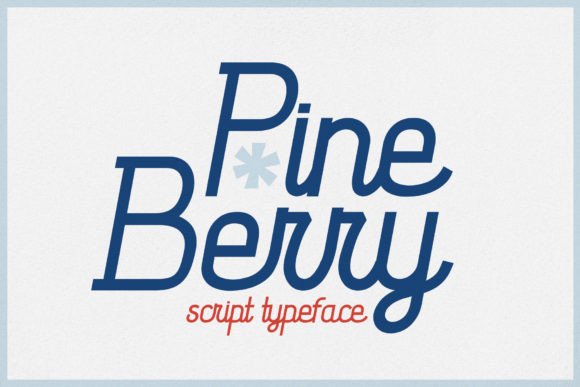
As a maker who’s spent years hand-lettering labels, designing wedding invites, and cutting SVGs for Etsy listings, I know how much a single font can shift the entire feel—and sales—of a product. Pineberry isn’t just another script font. It’s a handmade cursive typeface with genuine 1960–1970s graphic design warmth: soft curves, gentle contrast, and that unmistakable lighthearted charm that makes customers pause, smile, and reach for their cart.
What sets Pineberry apart is its quiet confidence. It doesn’t shout—it invites. That makes it perfect for physical products where subtlety and sincerity matter: artisan candle jars, boutique soap tags, linen wedding stationery, or hand-stamped tote bags. Unlike overly ornate scripts that vanish at small sizes or choke vinyl cutters, Pineberry holds clarity even at 12 pt on a product label—and shines at 60 pt on a farmhouse welcome sign.
I’ve used Pineberry across dozens of real projects, and here’s what works consistently:
- Candle & bath product labels: Its rounded terminals and open letterforms print cleanly on kraft paper and matte sticker stock. No jagged edges when cut on Cricut Maker or Silhouette Cameo—even at ⅜” height.
- Wedding invitations & day-of signage: The subtle bounce in letters like “g”, “y”, and “f” adds movement without sacrificing elegance. Pair it with a light sans serif (like Montserrat Light or Poppins) for names, dates, and details—and your suite feels intentional, not cluttered.
- Digital printables & planner pages: Because Pineberry includes stylistic alternates and ligatures, you can swap in a swash “Q” for a quote header or use the connected “&” for a vintage-inspired mood board. It’s expressive enough for headers but restrained enough to keep body text legible when paired with a simple serif like Lora.
- Seasonal craft designs: Think Easter egg tags, summer lemonade stand signs, or holiday gift tags. Pineberry’s playful personality reads as joyful—not childish—so it scales beautifully from spring florals to cozy winter packaging.
- Mugs, shirts, and tote bags: Its medium weight and generous x-height mean it holds up well in screen printing and heat transfer. No thin hairlines to break or fill in. Just clean, friendly presence.
Readability matters—especially when your customer sees your font first on a mockup preview or a tiny Instagram story thumbnail. Pineberry avoids the common pitfalls of decorative scripts: no excessive flourishes that tangle on small stickers, no cramped counters that blur when printed at low resolution, and no inconsistent spacing that throws off alignment in layered SVG files. When I tested it on ¾” round stickers for a honey brand, every letter stayed distinct—even the lowercase “e” and “a”.
Font pairing is where Pineberry truly sings. As part of the Script Amp collection, it’s designed to complement—not compete—with functional typefaces. Try it with:
- A warm, humanist sans serif (like Nunito or Quicksand) for modern labels and digital templates;
- A gentle serif (like Merriweather or Playfair Display) for book covers or boutique packaging; or
- A clean mono-spaced font (like IBM Plex Mono) for contrast in social media graphics or price tags.
Don’t force Pineberry into long paragraphs or fine print—it’s a display font, not a text face. Use it for names, titles, short phrases, quotes, and decorative accents. Let it carry emotional weight while your supporting font handles the workhorse content. That balance is what makes handmade brands feel polished, not overdesigned.
Inside the Pineberry package, you’ll find OpenType features that actually help in production: standard ligatures for smoother “fi”, “fl”, and “ff” connections; discretionary ligatures for flair (think “love” or “forever”); and alternate characters that add variation without manual tweaking. It supports Latin-based languages—including extended diacritics—so if you sell bilingual greeting cards or serve international markets, you’re covered. Files come in OTF and TTF formats, fully compatible with Cricut Design Space, Silhouette Studio, Adobe Creative Cloud, and Canva Pro.
And yes—this is a commercial font, licensed for physical product use. You can embed Pineberry in printable PDFs, cut it for vinyl decals, apply it to SVG files sold on Etsy, or use it in client branding projects. No hidden restrictions. Just clear, ethical licensing that respects both your time and your business model.
If you’ve ever hesitated before buying a script font—wondering whether it will cut cleanly, scale well, or match your brand voice—you’ll appreciate how thoughtfully Pineberry bridges beauty and utility. It’s not nostalgic in a costume-y way. It’s nostalgic in the way your grandmother’s handwritten recipe card feels: familiar, kind, and quietly full of character.
For me, Pineberry has become the go-to for anything that needs heart without heaviness—whether it’s a new line of lavender sachets, a set of printable baby shower games, or a custom chalkboard menu for a local café pop-up. It doesn’t try to be everything. It does one thing beautifully: helps handmade products feel human-made, not machine-generated.
That’s the power of choosing the right typeface—not just as decoration, but as part of your product’s voice, texture, and trust. Pineberry reminds customers that something was made with care. And in a world of mass-produced noise, that’s worth every penny.